
Prismé
A controlled customization system that prevents invalid orders while keeping production clear.
A step-by-step made-to-order flow that stays production-safe.
Stage
Live
Type
Work study
Services
Shopify, UX, System Design
Stack
Shopify, Dawn, Metaobjects
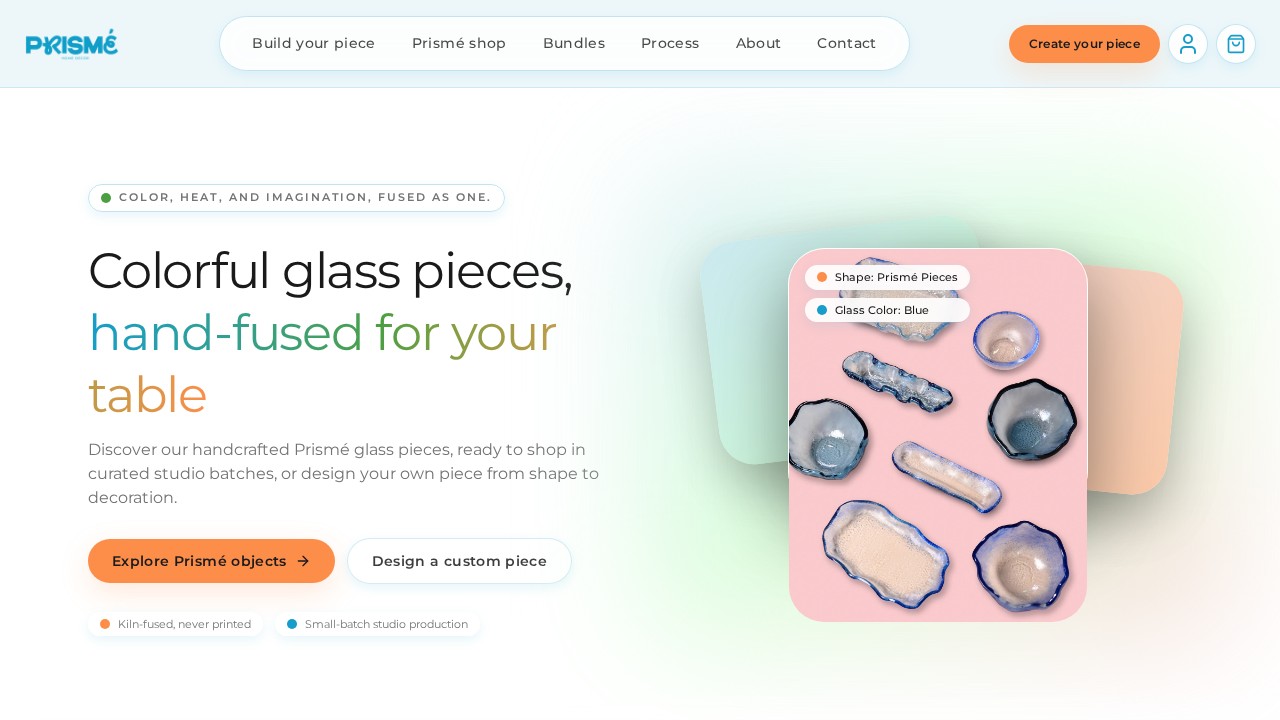
Context
Why this had to exist
Prismé needed to exist because the required product workflow was not supported by Shopify’s native features or by any theme-based solution.
Shopify allows selling through variants, but it does not allow customers to build their own valid product configuration through logic-driven steps. Themes and drag-and-drop builders only affect visual presentation. They cannot enforce decision rules, conditional paths, or prevent invalid combinations during customization.
Prismé sells custom-made products with no stock. This made correctness critical. If a customer submitted a wrong configuration, production would already be in progress. The result would be unusable products, angry clients, and direct financial loss.
Handling this casually, through variants, instructions, or post-order clarification, would have made errors unavoidable.
Constraints
What was intentionally not allowed
The first refusal was using Shopify variants as the primary customization mechanism. Variants could technically represent combinations, but they could not enforce logic, prevent contradictions, or guide users safely through decisions.
Variants were later added only under a strict rule: they could exist for ready-made products, but they must never replace the customizer.
The system was not allowed to depend on user education, order notes, or manual follow-ups. Instead, every order needed to arrive already clear and production-ready, without interpretation.
Refusals
Variants as customization logic
01
Rejected because they cannot enforce rules or prevent invalid combinations.
User instructions or education
02
Rejected because correctness must be guaranteed by the system, not by user behavior.
Manual order clarification
03
Rejected because production starts immediately and cannot rely on follow-ups.
The system
How the logic is enforced
The core system decision was to treat customization as a controlled, step-based process that produces a single final product with an explicit breakdown of decisions.
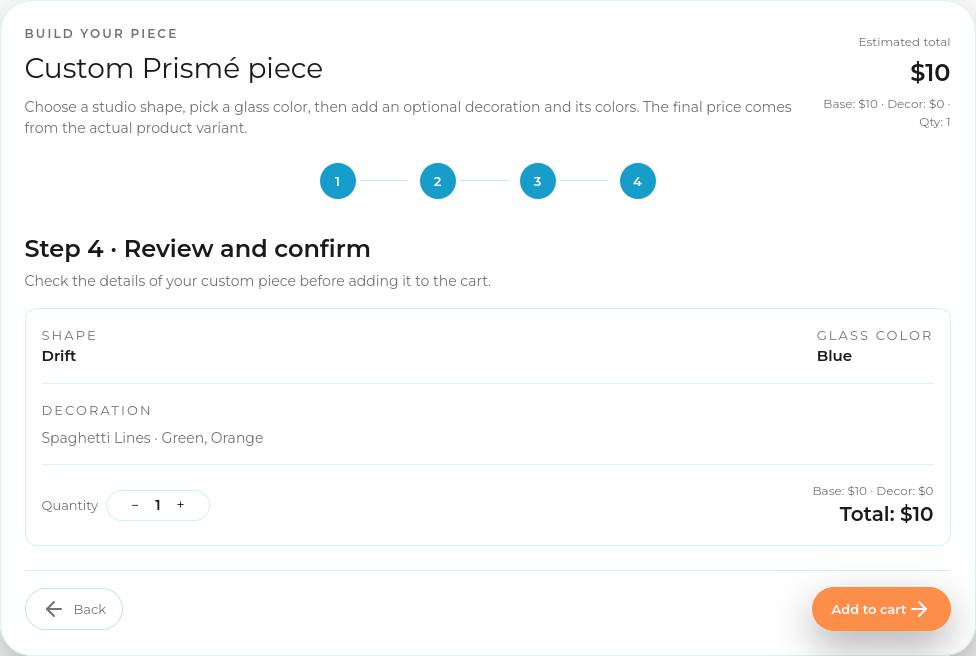
Before adding to cart, the user is required to review the full configuration. Each choice is listed clearly so the user can confirm correctness.
Customization logic is enforced through rules, not suggestions.
Ruleset
- Each shape only allows specific decorations
- Each decoration only allows specific colors
- Choosing one decoration forbids all others
- Selecting two colors prevents selecting a third
- Selecting multicolor forbids selecting any additional color
Intentional simplicity
Where complexity was refused
Simplicity was applied where correctness mattered most.
Inside the customizer, everything unnecessary was intentionally removed so attention stays on the decision being made.
Limits
Outcome
What this enabled
Client
- Sell ready-made products using standard variants
- Offer full custom products through a guided, error-proof system
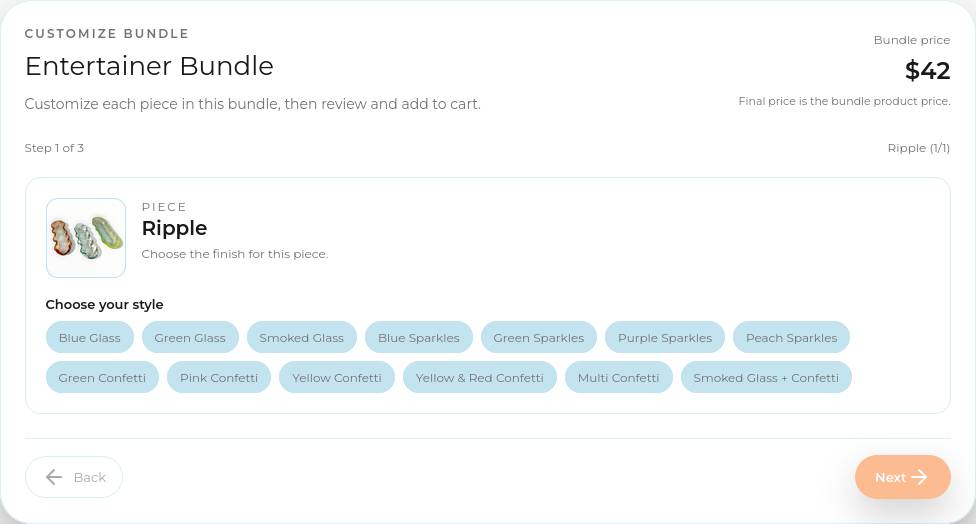
- Create discounted bundles while preserving per-item customization
Proof
Evidence of decisions, not decoration.
01
Review order page before add to cart
Forced confirmation before checkout
02
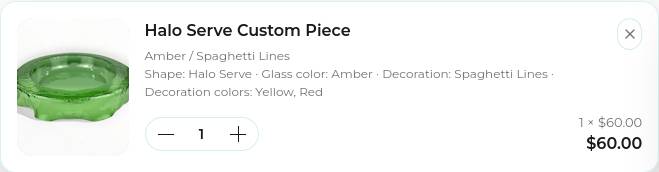
Cart item showing human-readable configuration
Production clarity
03
Bundle customization step per item
Per-item logic instead of shared bundle variants
Next
If you want a presence that does not blend in,
it has to be built with intent.